
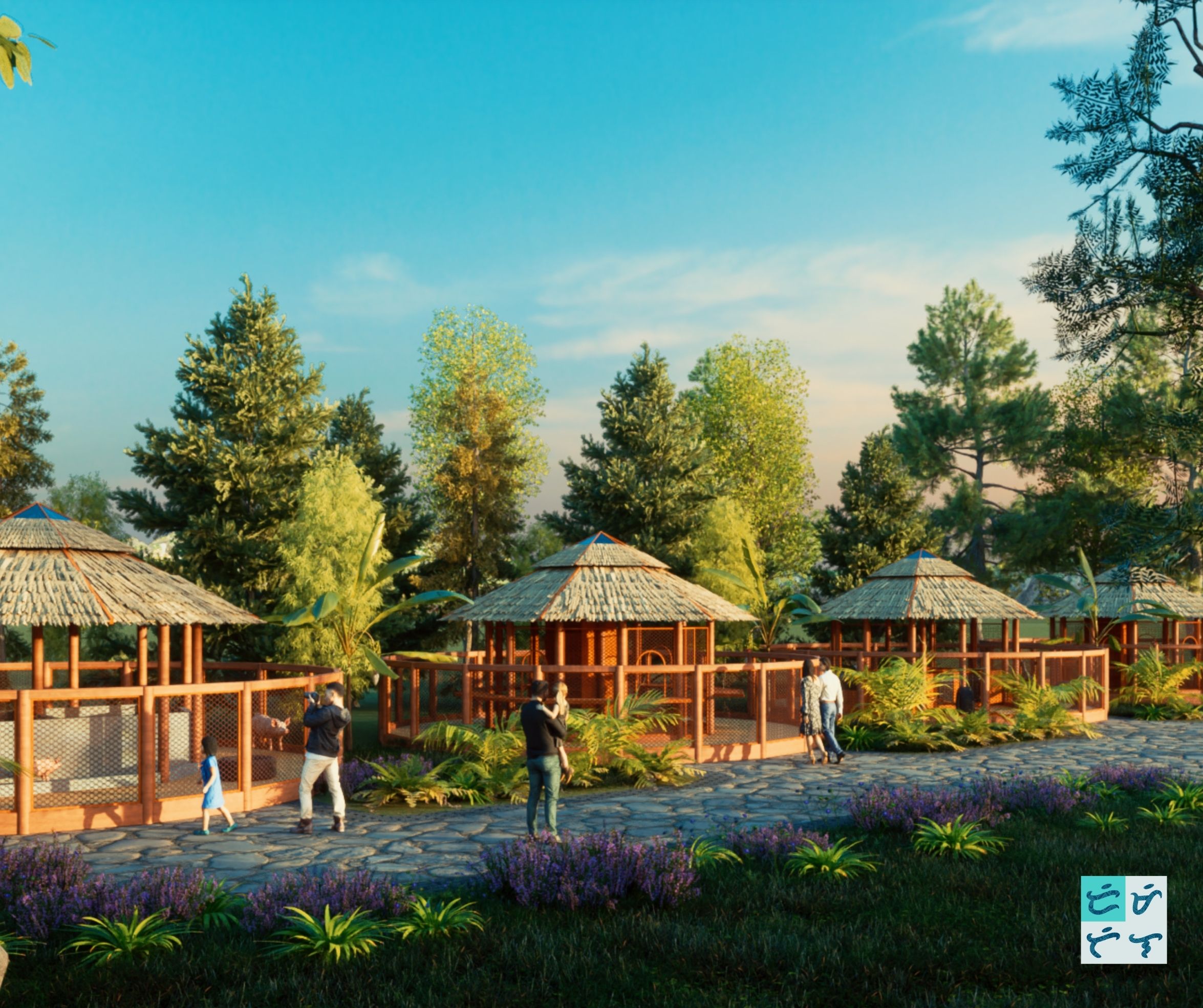
The Verdeli Masterplan is a community-centered development designed by Swito Designs to support agricultural education, sustainable food systems, and rural tourism. The project is planned as an integrated environment where architecture, farming, and local livelihood coexist in one organized framework. Every space in the plan is purposeful, from the built structures to the open fields.
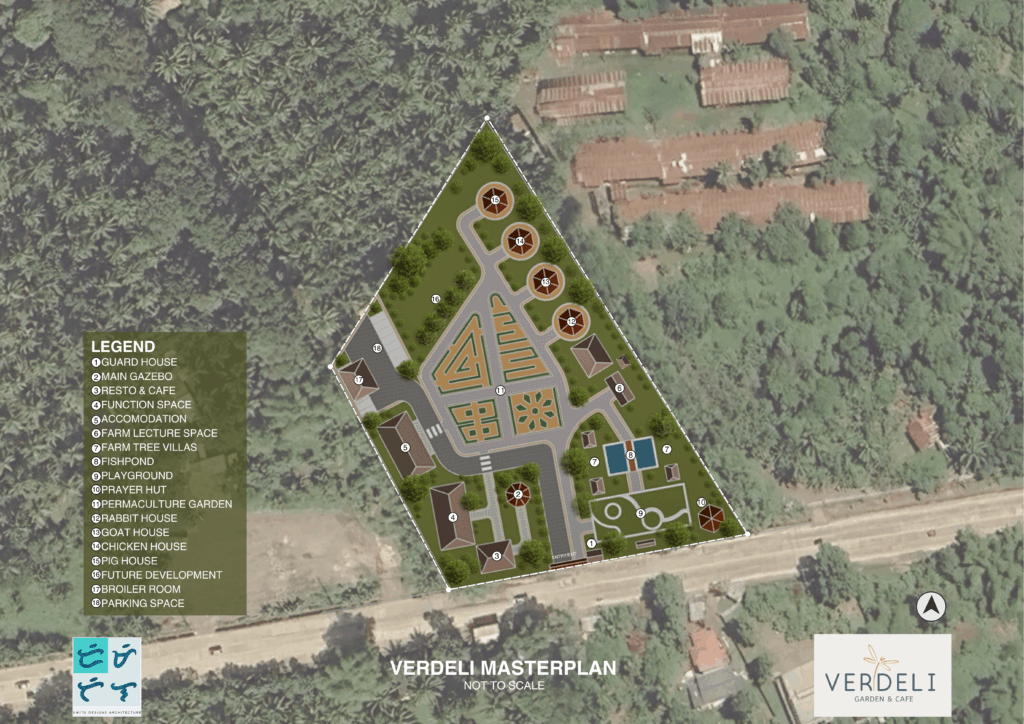
Site Organization and Layout
The layout of Verdeli follows a clear sequence of functions. At the entrance, a Guard House establishes order and security for all guests and workers. Beyond it, the Main Gazebo serves as the central gathering point for orientation and group activities. The design of this open structure encourages social interaction and visual connection to the surrounding farmland.
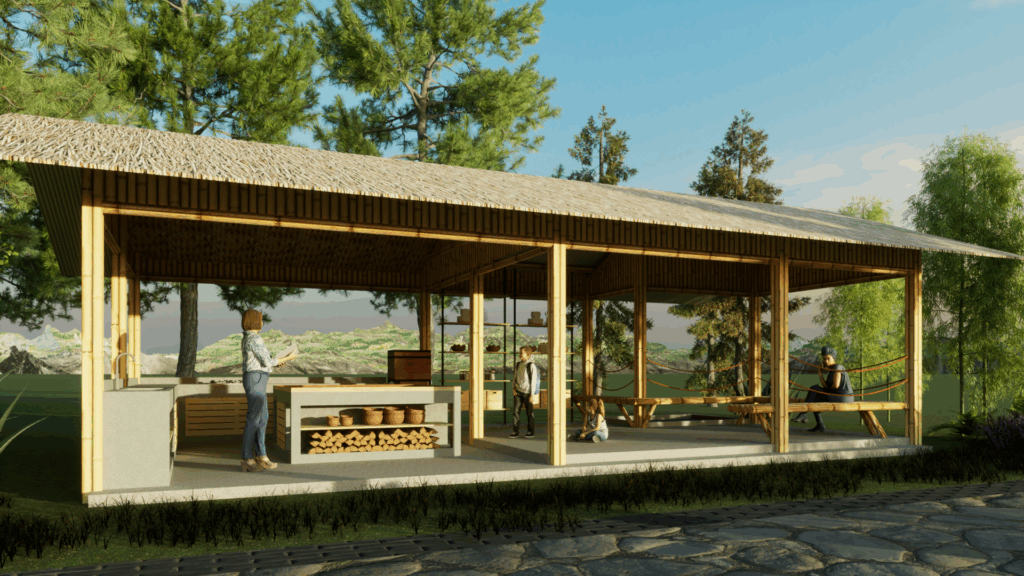
A Resto and Café stands at the heart of the development. It is designed to operate as both a dining and display space for produce coming from the farm. Adjacent to it is a Function Space that accommodates workshops, training sessions, and small events. The combination of these two facilities creates a productive relationship between food, learning, and community.
Hospitality and Accommodation
Guest accommodations are distributed across the site to provide different experiences of rural living. The main lodging area offers standard rooms for visitors attending lectures or seminars. A series of Farm Tree Villas provide a more private and elevated stay experience surrounded by vegetation. Each unit is built using local materials with natural ventilation, efficient roof design, and simple interior finishes suited to the climate.
The masterplan also includes spaces for farm-based education. A Farm Lecture Space serves as a venue for technical training and demonstrations on sustainable agriculture. It supports programs that promote responsible farming, composting, and waste reduction.
Productive and Agricultural Zones
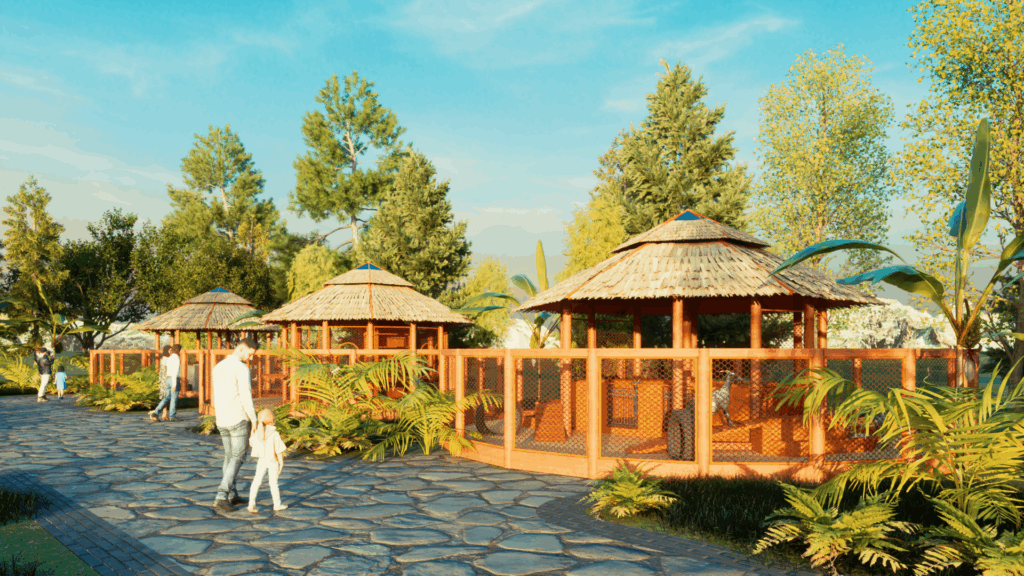
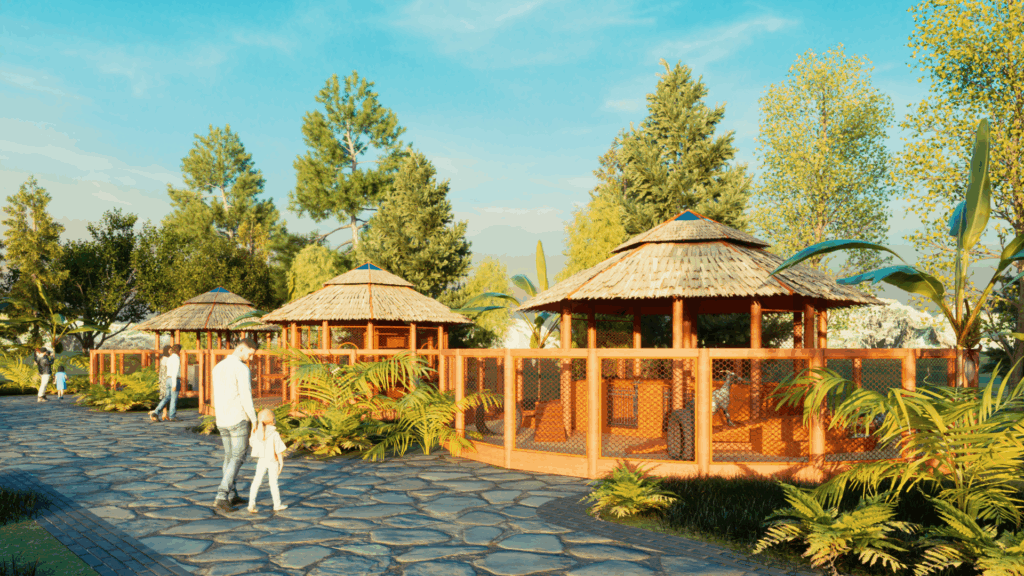
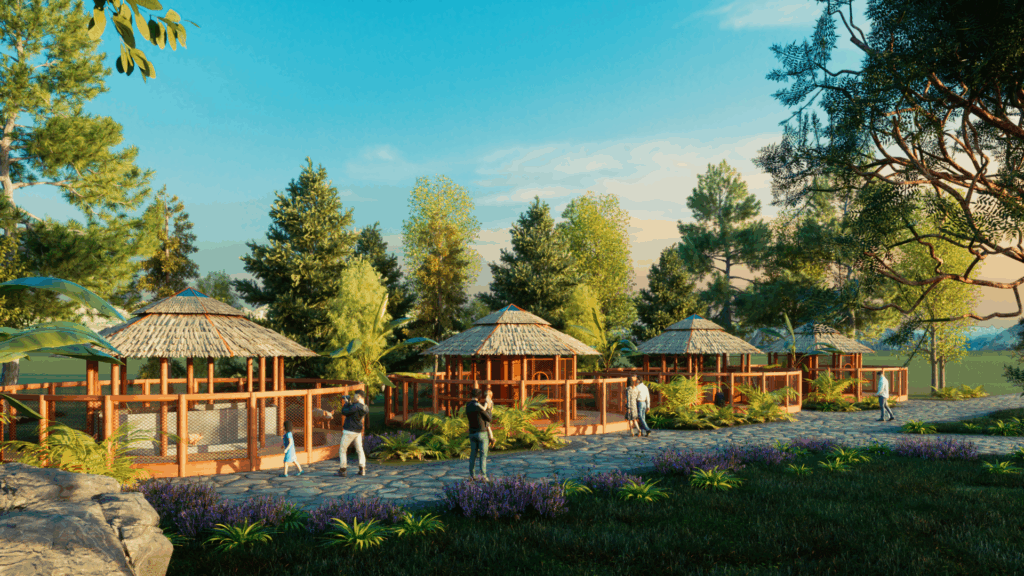
The productive core of Verdeli is organized around a Permaculture Garden that applies natural cycles of planting, harvesting, and soil renewal. The garden is linked to a Fishpond, Rabbit House, Goat House, Chicken House, and Pig House. These areas demonstrate how diversified small-scale farming can support both food production and ecological balance.
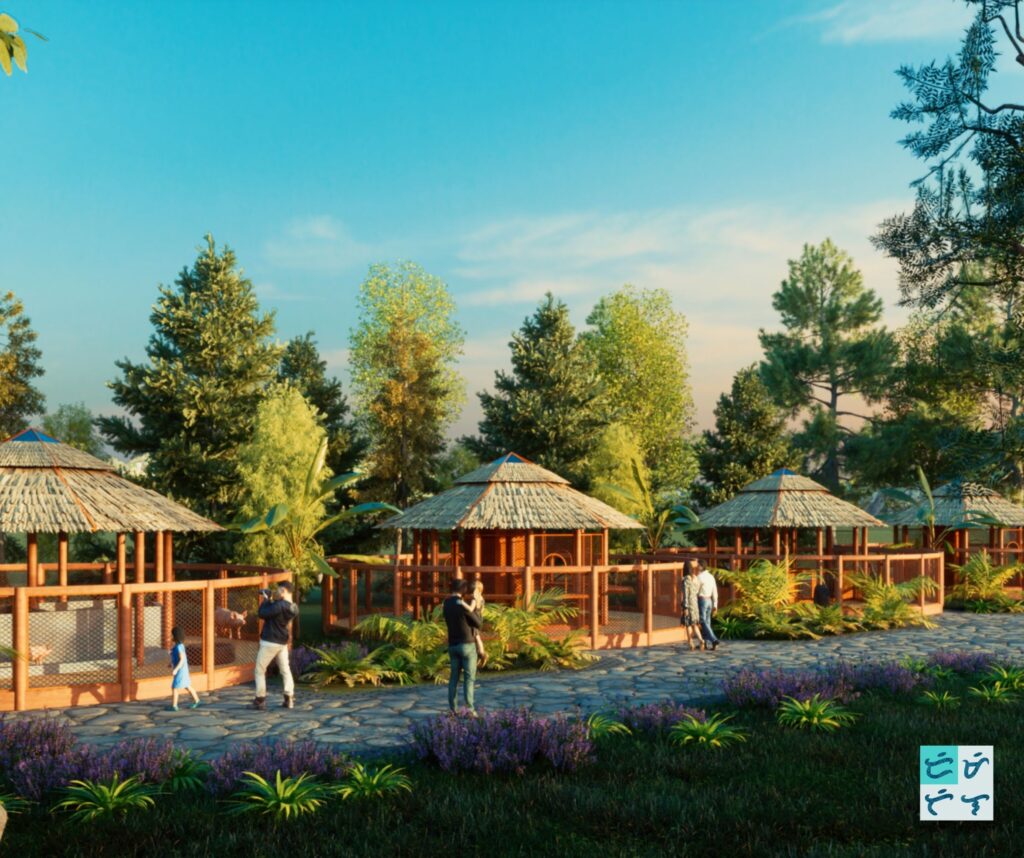
The Broiler Room and animal houses are located at a practical distance from the main public areas to maintain hygiene and reduce odor. Circulation paths are planned to separate pedestrian and service movement. Waste and water management systems are incorporated into the design to support long-term sustainability.
Spaces for Rest and Reflection
Open spaces are given equal importance in the layout. A Playground provides recreation for children and families. A Prayer Hut offers a quiet area for reflection. Both are surrounded by trees that provide shade and privacy. Parking spaces are strategically placed near entry points for accessibility without disrupting the landscape.
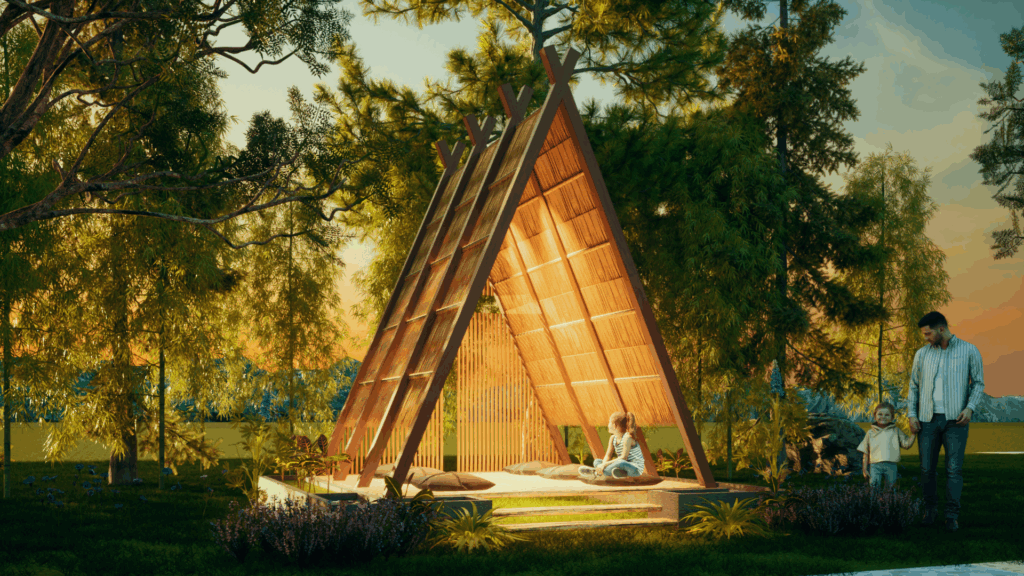
A designated zone for Future Development ensures that Verdeli can grow over time without losing its spatial order. This flexible area may accommodate future facilities such as processing spaces or additional accommodations.
Architectural Character and Design Principles
Verdeli uses an architectural language rooted in tropical and vernacular principles. The buildings are designed with simple geometries, wide eaves, and ample openings for air flow. Materials are sourced locally whenever possible. Bamboo, timber, and masonry are used for structure and finish. The architecture respects the visual integrity of the landscape by keeping rooflines low and consistent.
Pathways are designed to follow natural contours and connect key facilities efficiently. Landscaping uses native plant species that thrive in the local climate. The overall site experience is intended to be orderly, educational, and restful.
Vision and Purpose
The Verdeli Masterplan represents Swito Designs’ continuing effort to promote sustainable and community-based architecture in the Philippines. It demonstrates how agricultural productivity and hospitality can coexist in one development. The project supports local livelihood by providing spaces for education, production, and recreation within a single setting.
Verdeli serves as a model for responsible rural development that values design integrity, environmental awareness, and cultural respect. It is a practical framework for how architecture can help communities sustain both their natural and social environments.