
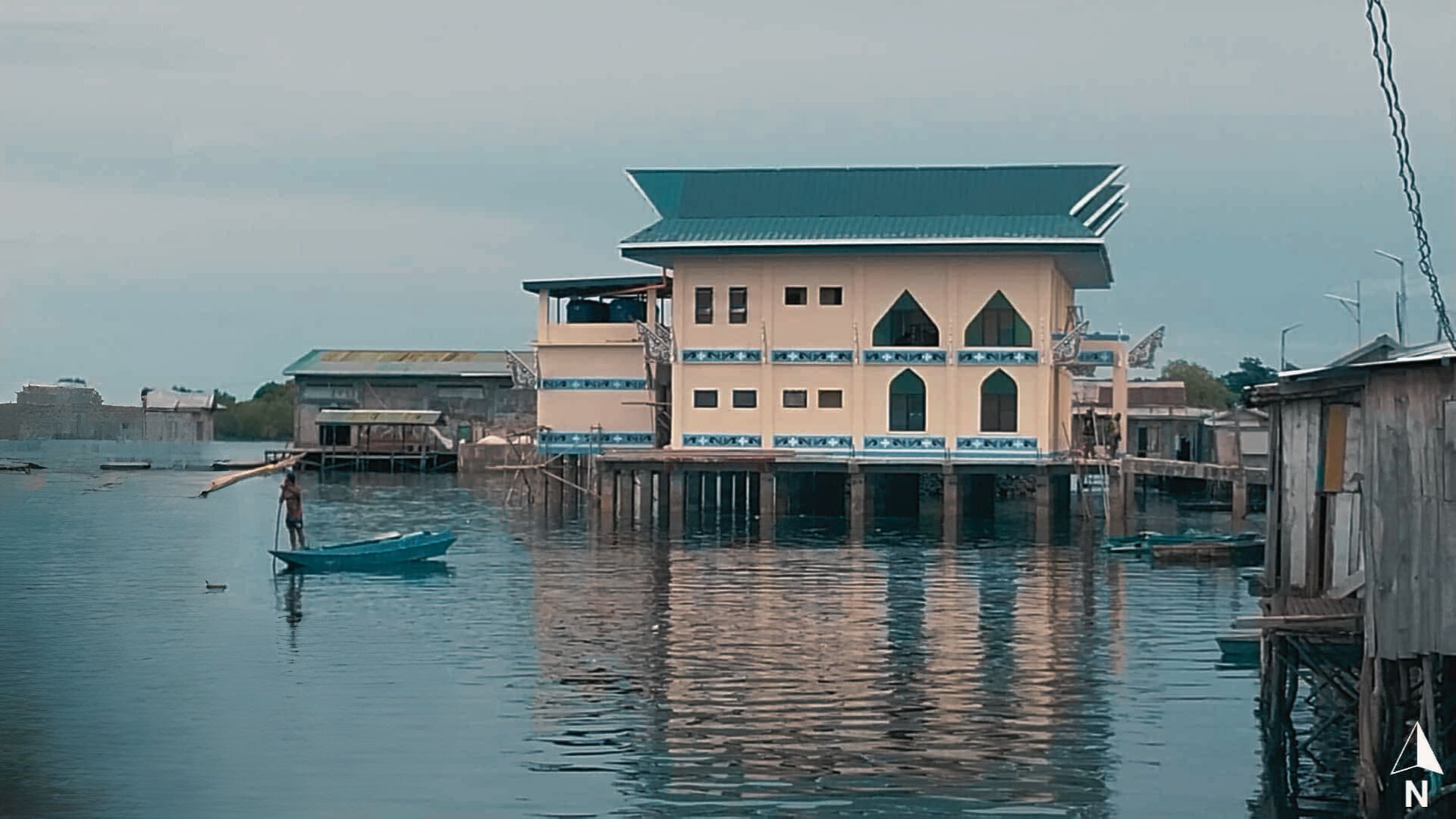
At Sitangkai, life has always moved with the water. Boats take the place of tricycles. Timber walkways become streets. Homes rise lightly on stilts, shaped by tides, wind, and memory. Here, the sea is not a boundary. It is home.
When we at Swito Designs were entrusted with the design of the Sitangkai Public Market, we understood from the start that this could never be a conventional structure. To build here meant first to listen—to the rhythms of daily life, to the knowledge embedded in vernacular architecture, and to a community whose identity has long been anchored on water.
The idea of a public market on stilts was not a stylistic choice. It was a response to place. The stilted form mirrors how Sitangkai itself has evolved over generations, allowing commerce, movement, and gathering to coexist with shifting tides. The market rises from the channel not as an interruption, but as a continuation of the town’s living fabric.
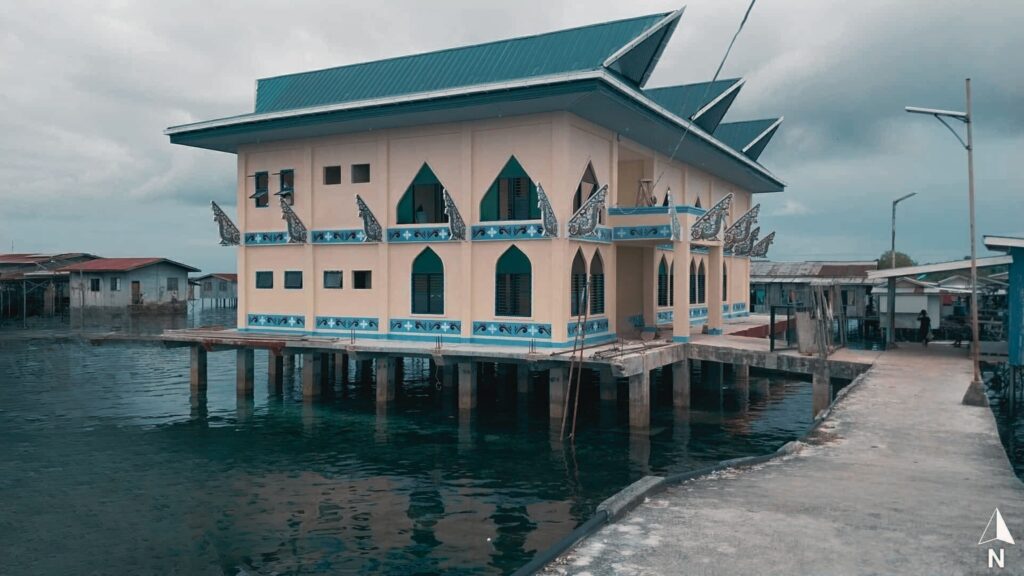
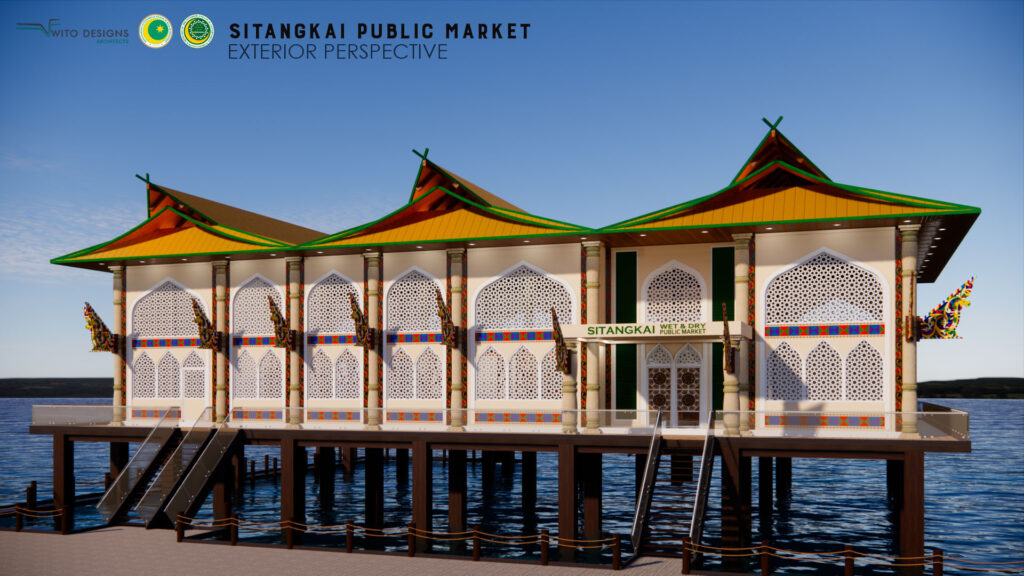
Our design draws from the cultural heritage of the Bajau and Tausug communities. Pointed gables reference sambulayang sails, arches echo Islamic architectural rhythms, and color and detailing are inspired by Mindanaoan motifs such as okir. Often called the “Venice of the South,” Sitangkai is not a place to be imposed upon by concrete typologies. It is a place that asks for harmony.
Elevated on driven piles, the market feels both grounded and afloat. Sunlight reflects off its façade, lending it the presence of a civic pavilion that belongs to the sea as much as to the people. The architecture does not shout. It moves quietly, in cadence with water and wind.
Inside, the layout is guided by climate and compassion. Open planning allows for natural ventilation and cross-breezes. Shaded circulation spaces offer comfort in a tropical setting. A mezzanine level provides additional trading areas, while generous pathways respect the dual movement of people and boats. Every decision responds to how Sitangkai lives, works, and gathers.
The journey from concept to completion was shaped by collaboration and patience. This project came to life through the shared efforts of public servants, engineers, builders, and the community itself. It stands as proof of what can emerge when governance and design move with the same intention: to serve people, protect culture, and strengthen livelihoods.
For us as designers, the Sitangkai Public Market is more than a completed project. It is a reminder that architecture carries memory. It affirms our belief that progress does not require erasing identity. When architecture listens closely to place, it becomes part of its story.
With this market, Sitangkai gains more than a space for trade. It gains a landmark, a gathering place, and a symbol of dignity rooted in who the community has always been.
The structure now stands—quietly resilient, culturally grounded, and alive—much like Sitangkai itself.